
January 2026: From the Annual Report: Recently published publications from the project
Paszko, Izabela. „Spatiality and Its Challenges for Commemorative Practices.” Doing Public History – Hypotheses Blog. Accessed February 6, 2026. doingph.hypotheses.org/2310.
Paszko, Izabela. „Täterort Topography as Object: The Munich Documentation Center for the History of National Socialism and Modern Infrastructures of Memory.” Relevant Tomorrow 5, nos. 27–28 (2025): 23–40. doi.org/10.51740/RT.5.27.28.3.
Paszko, Izabela. „Zarys niemieckiego krajobrazu upamiętnienia – współczesne konteksty i wyzwania.” Przegląd Zachodni, no. 1 (2025): 33–55.
Rejniak-Majewska, Agnieszka. „Nieostrość i punctum (Sasnal w Muzeum Polin).” In Ars Inspiratio. Studia dedykowane prof. Eleonorze Jedlińskiej, edited by A. Pawłowska and K. Stefański, 311–329. Łódź: Wydawnictwo Uniwersytetu Łódzkiego, 2024. Published January 2025. doi.org/10.18778/8331-666-6.14.
Rejniak-Majewska, Agnieszka. „Upamiętnienie i postpamięć. Współczesne działania artystyczne w przestrzeni wystaw historycznych.” Sztuka i Dokumentacja, no. 33 (2025): 53–68. doi.org/10.32020/ArtandDoc/33/2025/8.
Saryusz-Wolska, Magdalena. „‘The Walls Are Where They Are’: An Infrastructural Approach to the Holocaust Galleries.” In The New Holocaust Galleries at the Imperial War Museum London: Conception, Design, Interpretation, edited by Stephan Jaeger and James Bulgin, 395–414. Berlin–Boston: De Gruyter, 2025.
Załuski, Tomasz. „Potential Infrastructures: An Unaccomplished Project of a Computer Database of Artistic Culture at the Center for Contemporary Art Ujazdowski Castle in Warsaw, 1985–1995.” Muzeológia a kultúrnededičstvo / Museology and Cultural Heritage, no. 4 (2025): 51–76.

November 2025: Agnieszka Rejniak-Majewska and Tomasz Załuski presented their papers on the infrastructures of the exhibitions “Terribly Close: Polish Vernacular Artists Face the Holocaust” and “Wilhelm Sasnal: Such a Landscape” at the conference “Exhibiting the Holocaust 1945–2025: Genealogies and Legacies” in Berlin. The presentations were part of the thematic section “Exhibitions as Infrastructures of Remembrance”.
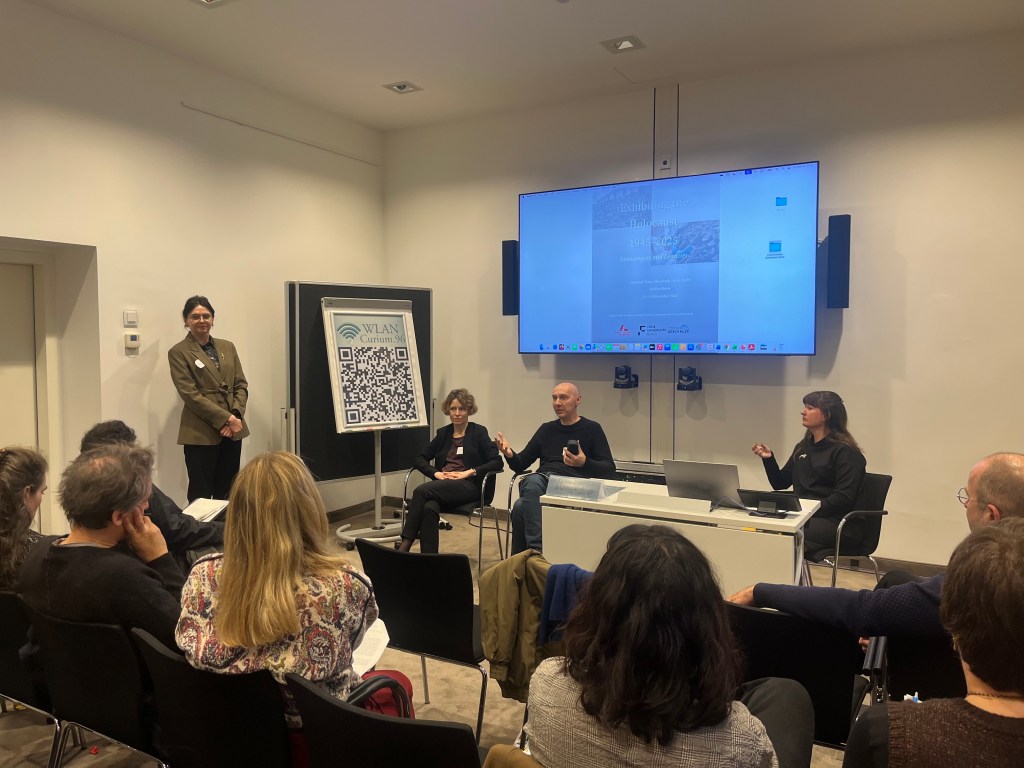
October 2025: Tomasz Załuski presented an expanded version of his paper “The Infrastructural Agency of Exhibition Spaces. How Memory is Produced Through Art on Display” at the 57thAssociation for Slavic, East European, and Eurasian Studies ASEEES Annual Convention (online conference). The presentation formed part of the panel “Exhibitions on Difficult Pasts and Their Infrastructures”, which he organized, as well. The other panelists were Agata Pietrasik, Daniel Véri, Cristian Nae, Magdalena Moskalewicz (chair) and Adrian Cioflanca (discussant).
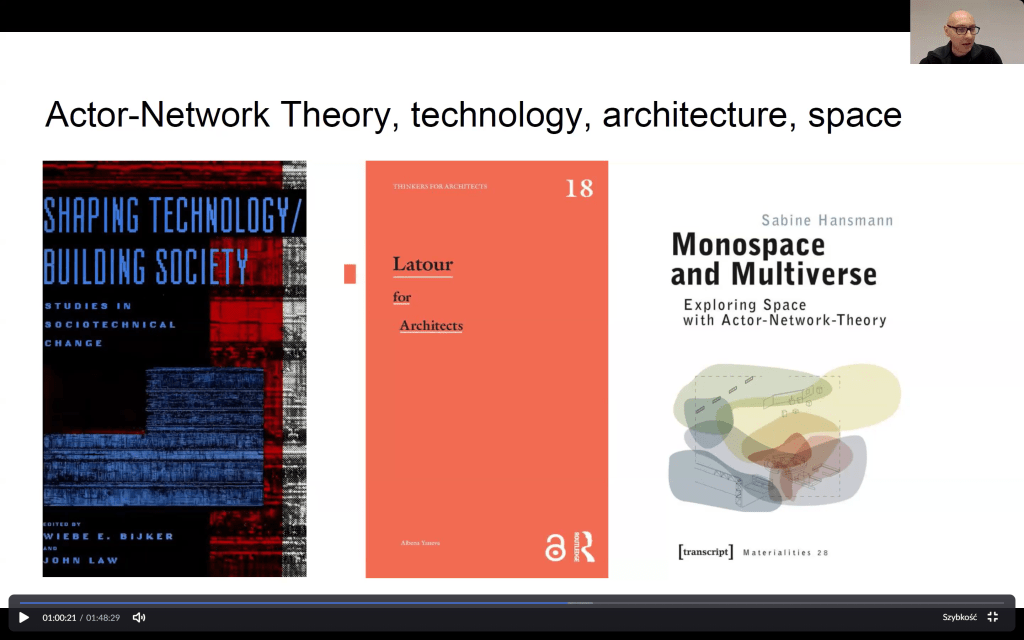
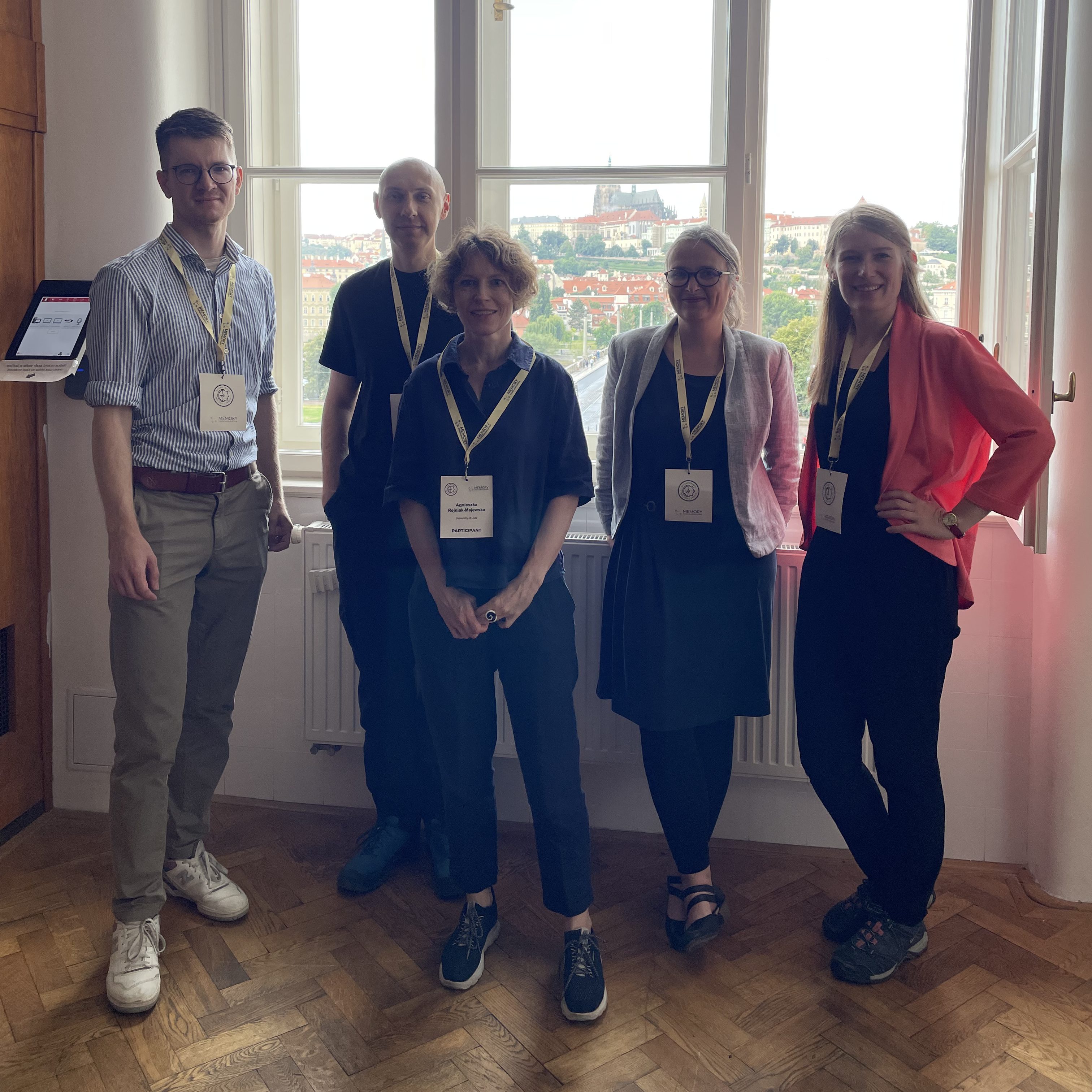
July 2025: Memory Studies Association Annual Conference, Prague Panel “Infrastructures of Memory: Exhibitions, Institutions, Sites of Memory”
During the 9th edition of the Memory Studies Association conference, held on 16 July 2025 in Prague, a panel entitled “Infrastructures of Memory: Exhibitions, Institutions, Sites of Memory” took place. The panel was devoted to an analysis of the infrastructural conditions of memory processes, understood as an interplay of material, technological, institutional, and administrative factors that jointly shape cultural memory. The point of departure was a critique of dominant narratives in memory studies that focus on visible actors such as curators, institutional directors, or politicians, while neglecting “hidden” forms of agency. The speakers discussed how exhibition architecture, display technologies, legal regulations, funding models, and the everyday work of technical and administrative staff influence the form and meaning of narratives about the past. The analyses concerned museum exhibitions, memory institutions, and sites of commemoration related to the Second World War and its immediate aftermath.
The panel featured presentations by Tomasz Załuski, Agnieszka Rejniak-Majewska, Izabela Paszko, and Václav Sixta, who presented case studies from Poland, Germany, and the Czech Republic. The discussion was chaired by Magdalena Saryusz-Wolska.
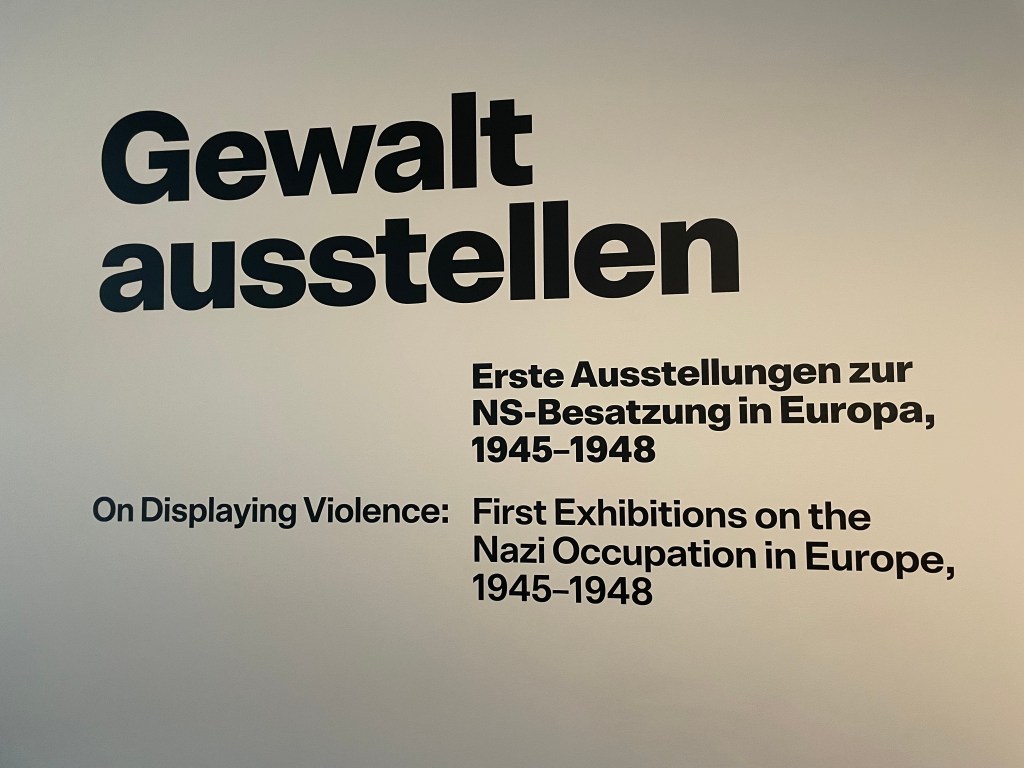
June 2025: Tomasz Załuski conducted archival and field research at the Martin Gropius Bau in Berlin. This was part of a study of the exhibition “Side by Side. Poland–Germany. 1000 Years of Art and History (2011–2012).” He also visited and documented the core exhibition “Jewish Life in Germany: Past and Present” at the Jewish Museum Berlin as well as “Gerhard Richter. 100 works for Berlin” at the New National Gallery. Together with Magdalena Saryusz-Wolska, he took part in Agata Pietrasik’s curatorial tour of “On Displaying Violence: First Exhibitions on the Nazi Occupation in Europe, 1945–1948” at the German Historical Museum.
From June 24 to 26, 2025, Izabela Paszko presented “Environmental Infrastructures and Memoryscapes: Exploring the Intersection of Sustainability, Politics, and Commemoration in Bavaria” at the DAAD conference “Materiality and Precarity: Preserving Holocaust Memorial Sites,” held at the Woolf Institute in Cambridge.
May 2025: Conference “Infrastructural Turn. How Materiality Shapes Exhibitions about Difficult Pasts” at the German Historical Institute Warsaw
From May 29–31, 2025, an international academic conference entitled “Infrastructural Turn. How Materiality Shapes Exhibitions about Difficult Pasts” was held at the German Historical Institute Warsaw. The conference was devoted to the analysis of the infrastructural, material, and institutional conditions shaping exhibitions dealing with difficult heritage, with particular emphasis on the Second World War and the Holocaust. The program included thematic panels, lectures, and a visit to the Museum of Modern Art in Warsaw. Discussions focused, among other topics, on the relationships between architecture and exhibition space, curatorial strategies, digital media, legal and organizational frameworks, and the role of nature and the environment in commemorative processes. The conference brought together 28 speakers from 10 countries. The event created a space for international scholarly exchange and for in-depth reflection on the infrastructure of memory.
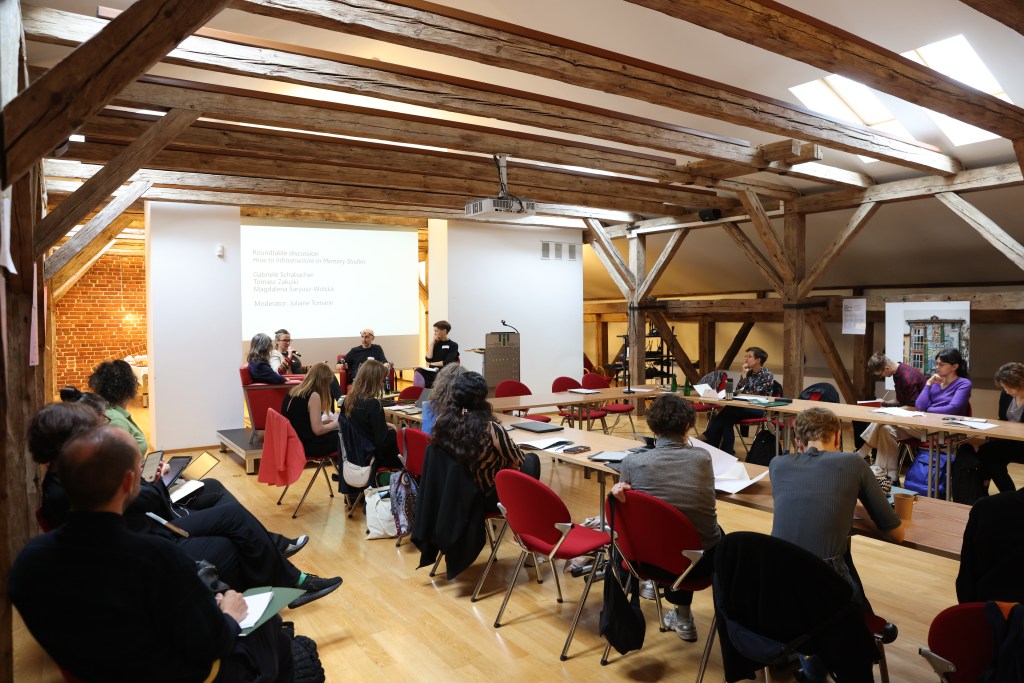
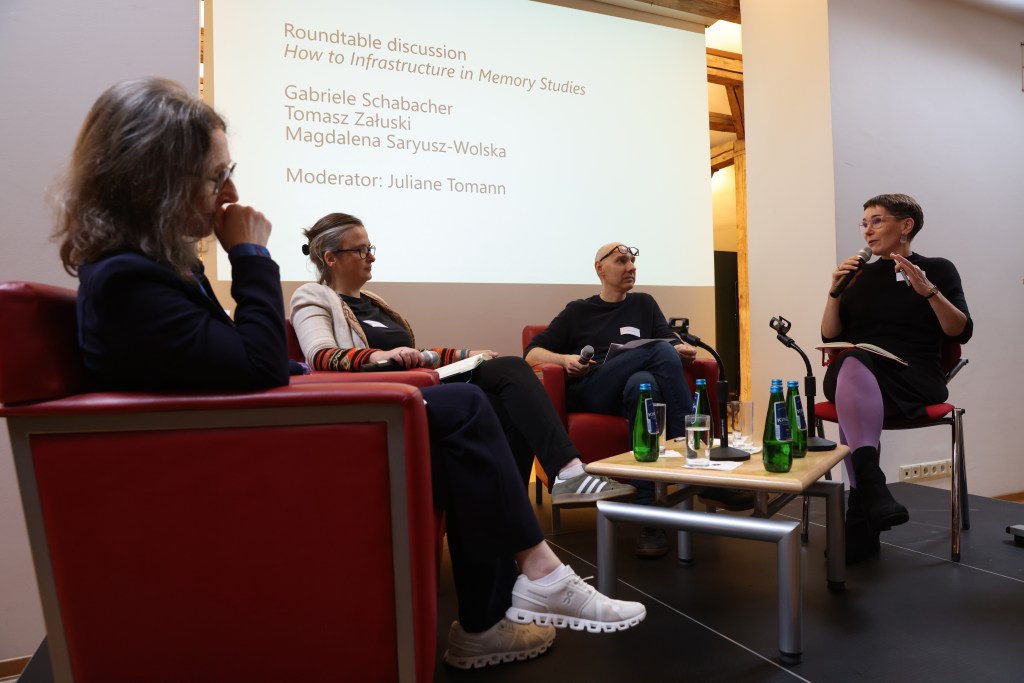
On May 15, 2025, Izabela Paszko delivered a guest lecture entitled “Infrastructural Insight into Commemorative Initiatives in Bavaria” at the Charles University in Prague.
In 2025, Izabela Paszko continued conducting interviews and holding research meetings in Landsberg am Lech and Munich. Due to ongoing and prolonged construction work at museums and memory sites in Landsberg am Lech, Neuaubing, and Nuremberg, planned visits to new exhibitions could not be carried out. Instead, Paszko undertook a series of contextual research visits to relevant institutions and exhibitions, including Łódź (Stacja Radegast, Centrum Dialogu im. Marka Edelmana, Oddział Martyrologii Radogoszcz, and the Central Museum of Textiles, exhibition “System Mody”), Freiburg im Breisgau (NS-Dokumentationszentrum, opened in March 2025), Berlin (Museum of German History, exhibition “Gewalt Ausstellen”), and Kaufbeuren (City Museum, exhibition “Massenverbrechen Zwangsarbeit: Kaufbeuren wagt Erinnerung”).
March 2025: At the end of March, the research team of the “Infrastructures of Memory” project met at the University of Regensburg in Germany to discuss the development and current status of the general research project (Magdalena Saryusz-Wolska), the progress of individual projects (Isabela Paszko, Seda Shekoyan, Zofia Hartman), first research results, as well as future research plans, conferences and publications for the coming year. The seminar, organized by Juliane Tomann (University Regensburg), and the individual presentations were followed by an active Q&A session and a fruitful round table discussion among project members. Feedback on the project and the presentations was also provided by the invited guest, art historian Vera Beyer. Later, the team visited the Jewish Museum and the NS-Documentation Center in Munich, where the researchers had the opportunity to study the history, concept and infrastructures of both.

On January 24-25, 2025, Izabela Paszko participated in the online conference “Museums, Memory, Politics” organized by the MSA Museums and Memory Working Group, where they presented “Weaving between Contemporary Social Emergencies, Civic Networks, and Narratives of Violence: The NS Documentation Center Munich from the Perspective of Infrastructures of Memory.”

October 2024: Magdalena Saryusz-Wolska conducts her research at the construction site of the Museum CC Płaszów in Cracow. At the stage, when there are still no walls of the building and construction workers pour the concrecte, we can obsereve the infrastructures of memory. The construction factors of the future exhibiton are already visible.

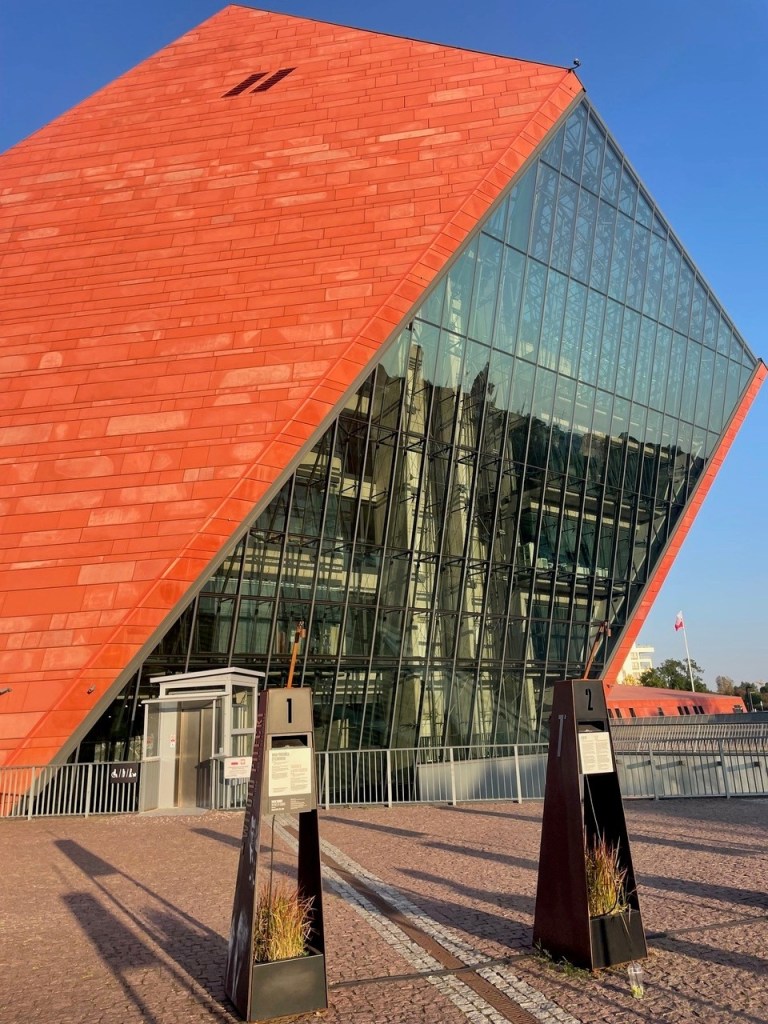
September 2024: Magdalena Saryusz-Wolska and Juliane Tomann conducted joint field research in Gdańsk. As part of the project, they are investigating the development of the Museum of the Second World War in Gdańsk from an infrastructural perspective. On site, they conducted expert interviews with the museum’s management, curators and technical staff. Further data collection with architects and the international scenography team followed until the end of 2025.
September 2024: Call for Papers for the conference „Infrastructural Turn. How Materiality Shapes Exhibitions about Difficult Pasts“ published. Conference date: 29-31 May 2025, submission deadline: 31 October 2024. Contact: paszko@dhi.waw.pl, more information on www.dhi.waw.pl.

August 2024: Agnieszka Rejniak-Majewska and Seda Shekoyan visited the Jewish Museum Frankfurt in Germany to conduct their research on site, studying the “Hideouts: Architecture of Survival” temporary exhibition by Natalia Romik and the museum’s permanent exhibition. The research trip was crucial not only for exploring the exhibition design, spatial and infrastructural aspects of “Hideouts”, but also for the general perspective and methodology of Shekoyan’s PhD project, which aims, among other things, to comparatively analyze the infrastructures of permanent exhibitions in Jewish museums both in Germany and Poland.
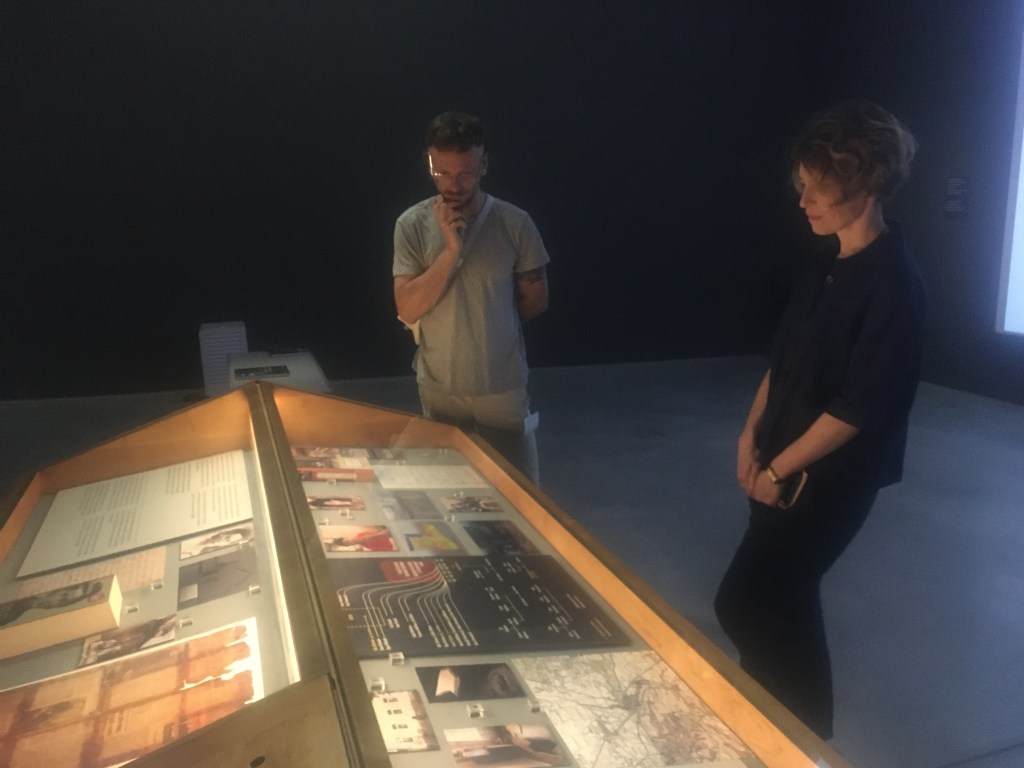
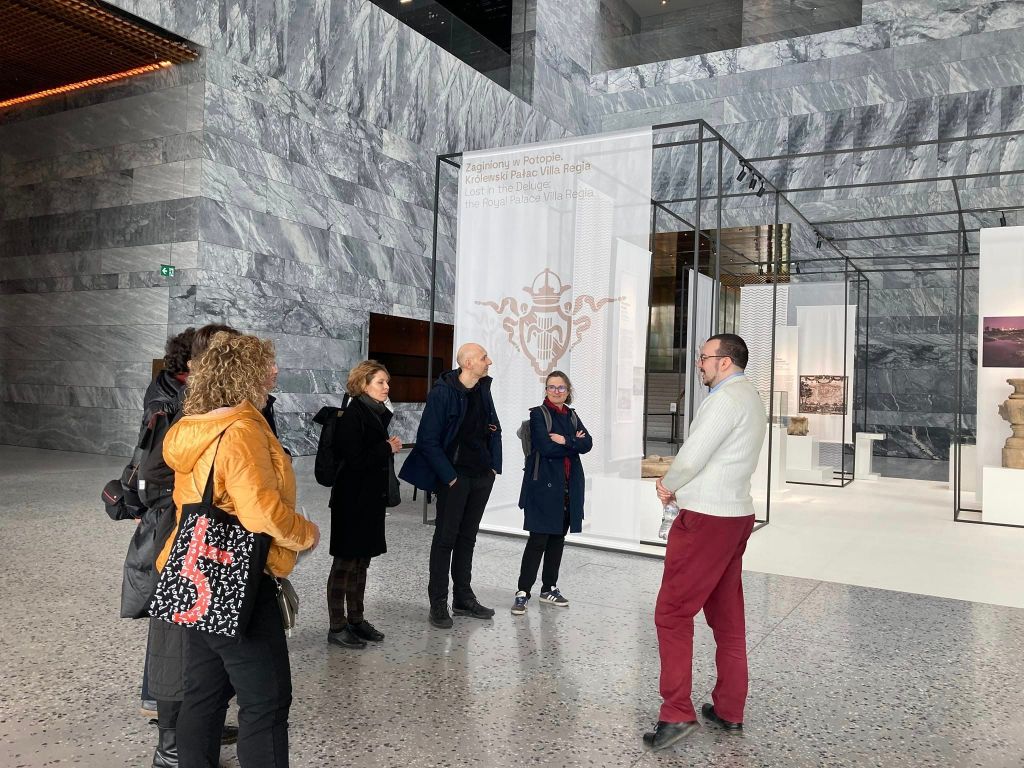
April 2024: At the end of April, the research team met at the German Historical Institute in Warsaw to discuss the progress of individual projects and the plans for publications and future conferences. The roundtable discussion of the book “Art Worlds” by Howard Becker gave the impulse to the conversation about the theoretical framework of the general project and its transdisciplinary character. The team also visited the Museum of Polish History (under construction), where the researchers met with dr Michał Przeperski, who explained the infrastructural factors behind this very place.
April 2024: Tomasz Załuski presented the assumptions, methodology and structure of the project at the Polish-German workshop „(Post)colonialism, (Post)migration, Transnationalism“, organised in Łódź by the Doctoral School of Humanities at the University of Łódź in cooperation with the Justus Liebig University in Gießen. He also conducted a mini-workshop on the perception of infrastructures shaping the experience of visiting exhibitions and existing in different fields of humanities research.
January 2024: Tomasz Załuski and Magdalena Saryusz-Wolska discussed the concept of infrastructure of cultural memory at the Johannes Gutenberg University Mainz with Gabriele Schabacher, Franziska Reichenberger, and Thomas Ullrich and students from the School for Media Culture Studies.
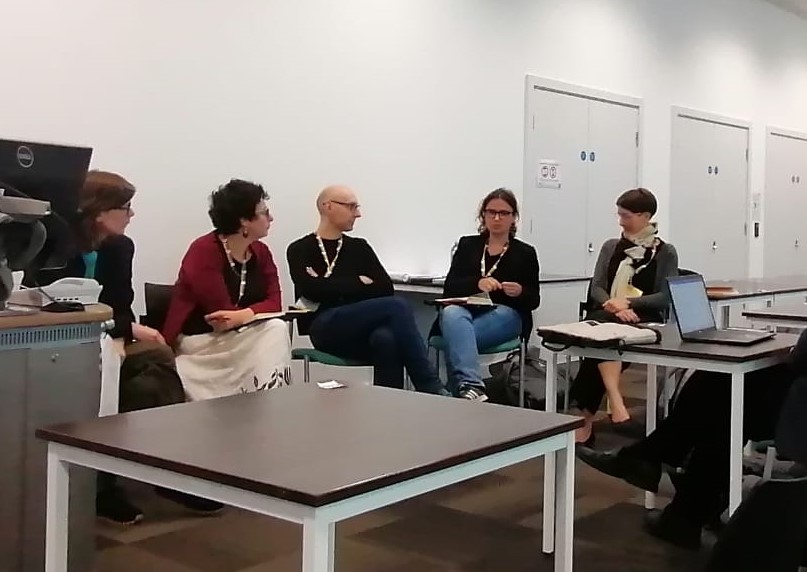
July 2023: Tomasz Załuski and Magdalena Saryusz-Wolska presented the project during the Memory Studies Association annual conference in Newcastle. As part of the common panel on infrastructures of memory, in collaboration with Zofia Wóycicka, Michalina Musielak, and Juliane Tomann, they presented their papers “Inside the black box of cultural memory: On the intersections between memory studies and infrastructure studies” (M. Saryusz-Wolska) and „Experimental infrastructures. Memory production and distribution in the field of visual arts“ (T. Załuski).
> Home
> About the Project
> Individual Projects
> Team
> News
> Contact


 Infrastructures of Memory